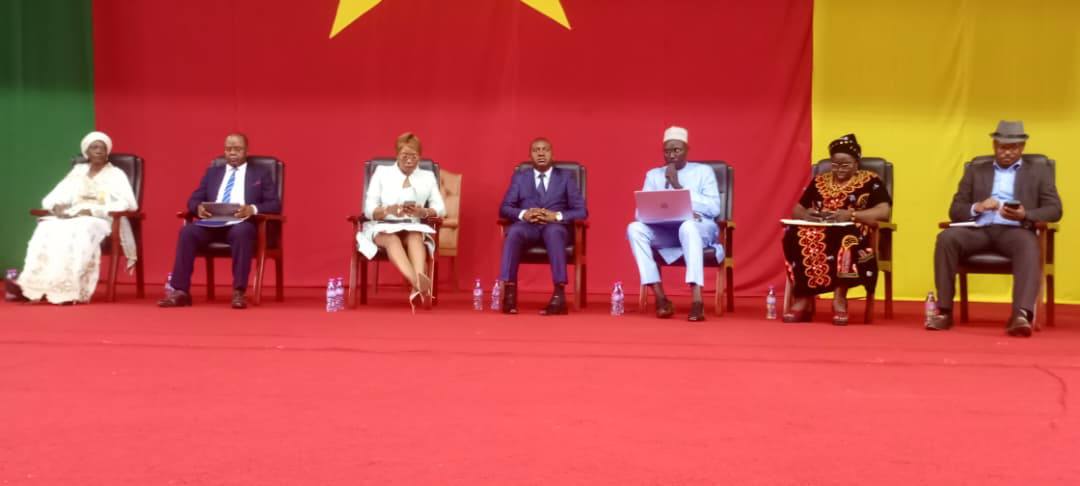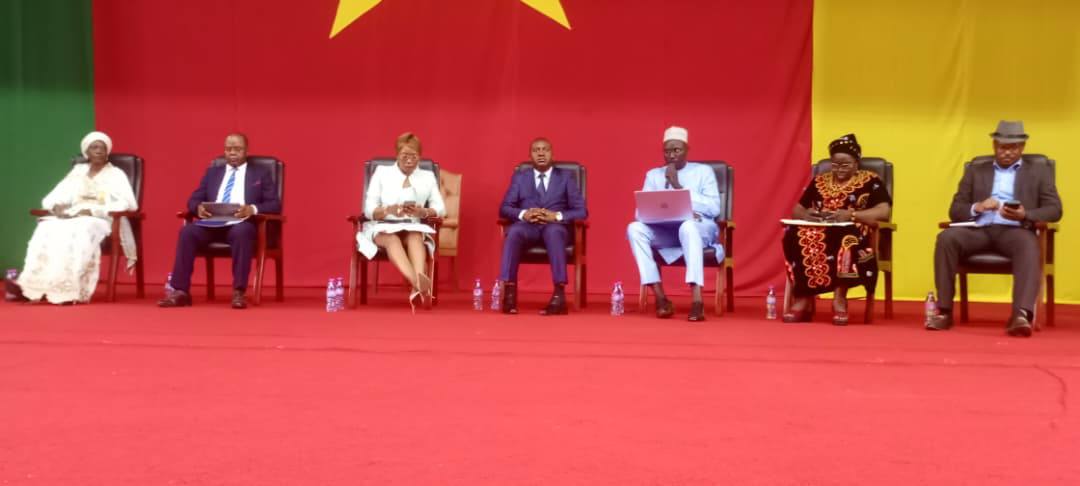
Moderator: Mrs. ATANGA Micheline, Technical Adviser No. 1 at the Ministry of Youth and Civic Education
The third panel of the Conference was devoted to the theme of Civic Education and Volunteering, two core pillars of youth development, citizenship building, and social cohesion.
Moderated by Mrs. ATANGA Micheline, Technical Adviser No. 1 at the Ministry of Youth and Civic Education, this panel sought to highlight concrete actions undertaken on the ground, while also reinforcing the strategic role of civic education and volunteering in shaping responsible, engaged, and patriotic citizens.
In her opening remarks, the Moderator set the tone for the series of presentations by laying out the conceptual and operational foundations of the discussions to follow. She emphasized the importance of coherence between policy orientations, institutional mandates, and field-level interventions.
“Civic education and volunteering are not abstract concepts; they are living practices that shape attitudes, behaviours, and the sense of belonging among young people,” she noted.
Her introductory statement served as a framework for the technical communications that followed.
Social Insertion of Youth and Volunteering: What Is Being Done on the Ground
This segment featured an intervention by Daniel EDIAKE, Director of Youth Social Insertion and Volunteering, who presented an overview of ongoing field-level actions aimed at supporting vulnerable and marginalized young people through social integration mechanisms.
Drawing from practical experience, he highlighted the role of volunteering as a tool for empowerment, civic responsibility, and community engagement. He explained how volunteering serves as both a pathway to personal development and a bridge toward employability.
“Volunteering is not just about service; it is a school of citizenship, discipline, and leadership,” he stated.
He also underlined the importance of community-based initiatives, partnerships with local actors, and continuous monitoring of youth participation.
Some of the detailed operational explanations related to these interventions are available in the official Forum documents.
Civic Education and National Integration: The Cornerstone of the Ministry’s Mission
The next presentation was delivered by MAHA HADJA OUZA Epse IBRAHIM, Director of Civic Education and National Integration, who provided a concise yet insightful overview of the missions, responsibilities, and strategic role of this Directorate within the Ministry.
She explained that civic education and national integration form the backbone of the Ministry’s institutional identity, as they directly address the values of unity, peace, patriotism, and responsible citizenship.
In her intervention, she outlined key missions, including:
-
The promotion of republican values and national symbols
-
The strengthening of national cohesion
-
The development of civic responsibility among young people
-
The prevention of deviant behaviours and social fragmentation
“Civic education is the engine that drives national integration, peaceful coexistence, and collective responsibility,” she emphasized.
She also highlighted ongoing programmes and awareness campaigns targeting schools, communities, and youth organizations.
Further technical details on the mandate and operational frameworks of this Directorate are contained in the official Forum documentation.
Continuation of Presentations: CNEPC and the National Volunteering Programme
The presentations of Panel 3 continued with interventions from the leadership of the National Centre for Popular and Civic Education (CNEPC) and the National Volunteering Programme.
These stakeholders shared their institutional experiences, challenges, and achievements in promoting active citizenship and structured youth engagement.
They emphasized the importance of proximity actions, grassroots mobilization, and sustained mentoring in ensuring that young people remain actively involved in national development.
Their contributions enriched the panel by bringing field realities into the policy dialogue.